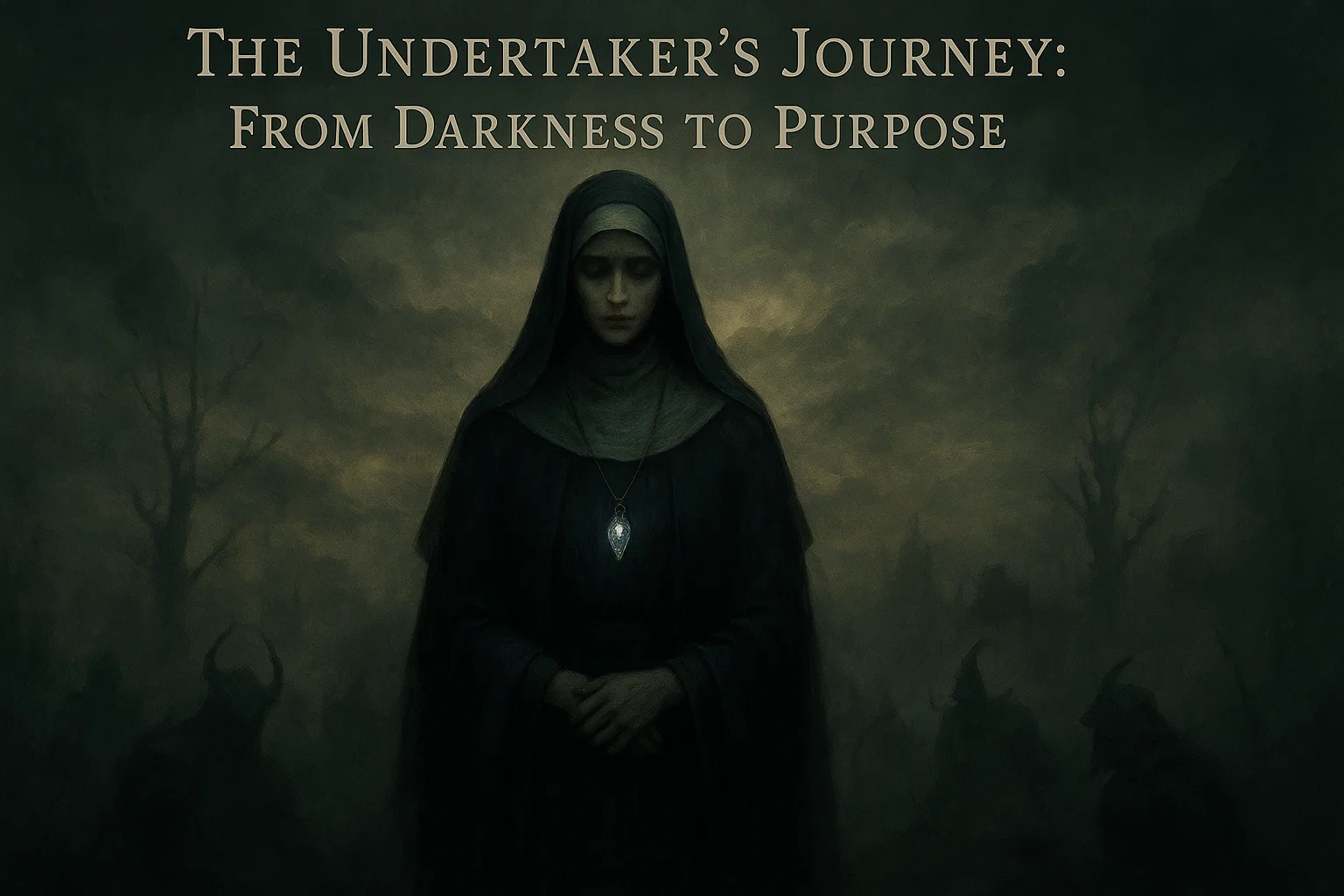
The Soulsborne series is famous for bleak stories filled with loss, madness, and broken people. Happy endings are rare, and when they do appear, they are usually quiet and fragile rather than triumphant. The Undertaker, a character introduced through the Elden Ring Night Train content, is a good example of this kind of storytelling. Her story does not end with a miracle cure or a clean victory, but with something more grounded: purpose, restraint, and a small sense of peace.
As a player who enjoys digging into FromSoftware lore, I found the Undertaker’s arc surprisingly human. Below, I want to break down her story in a clear way, explain what actually happens during her remembrance quests, and share why her ending matters both for lore fans and for players trying to understand Night Train on a deeper level.
Understanding the Undertaker’s Curse
The Undertaker begins as a nun sent to the Roundtable Hold by her church, officially tasked with slaying the Night Lord. From the start, it is clear she is not an ordinary servant of faith. She carries the Loam Hex, a curse that grants immense power at a terrible cost. This power demands constant consumption, and resisting it leads to intense pain, delirium, and even self-harm.
What makes her story hit harder is how early isolation defines her life. Raised in a monastery as an orphan, she is feared by both children and adults. To survive, she hunts beasts and consumes them, not out of cruelty, but necessity. This sets up one of the core themes of her arc: addiction. Power is not something she wants, but something she needs in order to live.
As players, we are already familiar with this idea. Many builds in Elden Ring revolve around constantly feeding into power loops, whether that means farming elden ring runes, stacking buffs, or relying on risky mechanics that trade safety for strength. The Undertaker embodies this concept in narrative form.
Clouds, Sunlight, and a Life Without Hope
One of the most consistent motifs in her chapters is the sky. Nearly every remembrance entry opens with clouds blocking the sun. This is not subtle, but it is effective. The lack of sunlight mirrors her emotional state: no hope, no warmth, just survival.
Her loneliness is emphasized repeatedly. She believes nobody understands her, and worse, she believes she deserves that isolation. Even when given a holy mission, she suspects it is just a convenient way for others to get rid of her. This mindset becomes important later, especially when her hallucinations begin.
The First Remembrance Quest and a Fractured Mind
The first remembrance quest marks a turning point. The Undertaker finds a new source of power in the Night itself. It soothes her mind even as it disgusts her, and she begins to fear what will happen if she ever gives it up.
During this quest, she imagines the Iron Menial ordering her execution for overindulging in Night power. She then “kills” other Nightfarers, only to realize afterward that none of it actually happened. This sequence is disturbing, but it also makes sense. Her paranoia and hallucinations reflect classic symptoms of addiction and withdrawal.
For players, this quest is a reminder that not everything in Elden Ring is meant to be taken at face value. Sometimes, what the game shows you is filtered through a character’s broken perception.
The Scholar and a Fragile Trust
Everything changes when the Scholar enters her story. After discovering her secret, he does not condemn her. Instead, he proposes a deal. He asks her to fake his death so he can investigate something in secret, and in return, he protects her secret.
This moment is crucial. For the first time, someone chooses her not for her power, but for trust. The leather case he leaves her becomes more than proof of the lie. It becomes a grounding object, something that calms her racing thoughts.
From a gameplay perspective, this relationship also ties multiple remembrance quests together. If you follow both storylines carefully, you start to see how Night Train rewards attention and patience, not just combat skill.
The Second Quest and Choosing Responsibility
In the second remembrance quest, the Undertaker is pressured by the Priestess about the Scholar’s disappearance. She refuses to speak, not because she is cruel, but because she is honoring her promise. Later, she actively searches for him, leading into the Scholar’s own quest involving the Cleansing Tear and the Great Hollow.
When she recovers the Scholar’s primal core, she quite literally saves his existence. In return, he gives her a crystal meant to help stabilize her hunger. More importantly, he names her his successor, asking her to stand witness to his legacy.
This is the emotional core of her arc. She is no longer just surviving. She is responsible for something beyond herself.
Resisting Ultimate Power
After defeating the Night Lord, the Undertaker gains access to a terrifying temptation: the dismembered finger of the Primordial Night Lord. Consuming it would likely grant overwhelming power. Given her history, this would seem inevitable.
But she resists.
Instead of feeding on it, she discards the finger, empowering the crystal into the Glass Necklace. The result is not raw strength, but stable, controlled power that grants calm rather than hunger.
In a game where players often chase efficiency, shortcuts, and even cheap elden ring runes to speed up progression, this choice stands out. The Undertaker’s ending suggests that unchecked power is not always the answer, even in a world built around violence.
Why This Ending Matters
The final chapter finally lets sunlight break through the clouds. It is not a bright, cheerful ending, but it is hopeful. The Undertaker does not lose her curse, and her life remains tied to battle. But she now has purpose and restraint.
For players, this arc reinforces why Elden Ring’s storytelling works so well. Progress is not always about numbers or gear. Sometimes, it is about understanding limits and making conscious choices. Even when players use outside resources or community tools like U4GM to manage their time better, the game’s strongest moments still come from narrative decisions that cannot be optimized.
The Undertaker’s story is a quiet but powerful example of Elden Ring’s strength in character-driven storytelling. Through recurring symbols, unreliable memories, and meaningful choices, her remembrance quests explore addiction, trust, and purpose. Her ending does not erase her suffering, but it gives it meaning. For players willing to slow down and pay attention, it is one of the most rewarding arcs in Night Train.
Mission Help: Elden Ring – Death Rite Bird (Snowfield) Guide


